
State Bank of India (SBI) is extensively using artificial intelligence to underwrite nearly Rs 1 lakh crore in MSME loans and automate the processing of cheques up to Rs 10,000. This AI adoption aims to enhance efficiency, free up employee bandwidth, and improve customer service across various banking functions.

A World Bank report, 'The Promise of Artificial Intelligence', states that AI presents a historic opportunity for low- and middle-income countries to overcome development challenges, despite many being unprepared. It advises these nations to adopt and adapt existing AI tools rather than focusing on building frontier models immediately. The report also notes a significant gap in AI adoption and job automation between high-income and developing countries.
Union Minister Ashwini Vaishnaw announced that the Indian government will release a draft consultation paper on Artificial Intelligence (AI) regulations within the next 30 days, focusing on safety, a human-first approach, skilling, inclusivity, and harm restriction.

India has secured a spot among the top 10 leading emerging-market performers in artificial intelligence (AI) readiness, with private investment in AI more than tripling to USD 4.1 billion in 2025, according to a new World Bank report.

Andhra Pradesh and Punjab National Bank (PNB) have signed an MoU to establish the PNB Quantum Finance Hub at Amaravati Quantum Valley. This initiative aims to foster innovation and adopt next-generation technologies like AI and Quantum Computing in the banking sector, focusing on cybersecurity, fraud detection, and customer experience.

State Bank of India Chairman C S Setty stated that banks will take three to four months to deploy the significant funds mobilised through foreign currency non-resident (bank), or FCNR(B), deposits, which is unlikely to cause "abnormal lending". He also highlighted the need for agentic artificial intelligence (AI) costs to fall sharply for its widespread deployment in India, envisioning its role in transforming banking from fraud detection to personalised financial assistance.
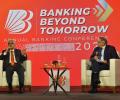
Bank of Baroda has launched 'bob World 2.0', an AI-powered mobile banking app featuring voice-command capabilities for payments and navigation. The updated app also includes a personal finance management module and a persona-based customer experience, aiming to offer intuitive, secure, and personalised banking services.
The World Bank's "World Development Report 2026" urges developing countries to adopt low-cost AI tools to accelerate progress in healthcare, education, and judicial services. The report highlights AI's potential to boost productivity and improve public services, while noting that jobs in high-income countries are more at risk from automation than those in developing nations.

An IIT Madras study reveals that financial cybercrime victims in India are often highly educated professionals, challenging the notion that only careless or financially unaware individuals are targeted. The research highlights that digital literacy doesn't guarantee protection, as fraudsters exploit stress and emotional vulnerabilities.

'Get people young, train them, assimilate them, and grow them adequately.'

Air India's use of artificial intelligence (AI) has had a huge impact on the airline major's call centre volumes and the technology integration has reduced costs by 100 times, a senior company executive said on Wednesday. The airline launched its own chatbot AI.g, earlier known as Maharaja, in May 2023. The chatbot has answered approximately two million queries since its launch, handling 93 per cent of customer inquiries without needing to pass them on to call centre agents, said Sathya Ramaswamy, Chief Digital and Technology Officer, Air India.

RBI Governor Sanjay Malhotra reiterated India's cautious stance on cryptocurrencies due to concerns over monetary sovereignty and capital flows, while actively promoting underlying technologies like distributed ledger technology and tokenisation. He also addressed the global rise in public debt and hardening bond yields, attributing it to increased government and private spending, including that driven by AI, and noted the implications of global interest rates on India's monetary policy.

Jio Platforms' initial public offering has shattered global records by receiving over one crore applications, underscoring immense investor confidence in the company's ambitious plans for technology, AI, and cloud services, with the IPO subscribed almost seven times overall.
A World Bank report highlights how Artificial Intelligence-powered weather forecasts have enabled small farmers in Telangana, India, to save up to USD 560 by adapting their farming practices to specific risks. The report, "The Promise of Artificial Intelligence," advocates for developing countries to rapidly adopt small, low-cost AI tools to enhance productivity, improve government services, and avoid missing out on the AI revolution.
Haryana Chief Minister Nayab Singh Saini met with a World Bank delegation to discuss advancing Artificial Intelligence, digital governance, and skill development in the state. The discussions focused on leveraging technology to enhance citizen services, with plans to showcase Haryana's AI Sandbox globally and develop a dedicated AI model for the state.
Finance Minister Nirmala Sitharaman has urged the Reserve Bank of India to accelerate its central bank digital currency initiatives, emphasising the need to sharpen capabilities with the digital rupee amidst rapid advancements in tokenisation, agentic AI, and quantum computing. She also highlighted critical concerns regarding cybersecurity, warning that autonomous AI systems are evolving rapidly and require robust safeguards. Sitharaman proposed a federated industry platform to give India's technology ecosystem a collective international voice.

'...A new challenge has emerged in the form of Mythos.'
A joint report by Dell Technologies and Zinnov reveals that despite high ambition, nearly 70% of India's Global Capability Centres (GCCs) are stuck at the pilot stage for AI adoption. Foundational gaps in data, infrastructure, and governance are identified as key bottlenecks preventing the scaling of AI initiatives into enterprise-wide production. The report highlights the need for significant reskilling of the workforce and robust foundations for industrialising AI responsibly.

NetApp CEO George Kurian announced that India is the company's fastest-growing market in Asia, driven by strong performance in BFSI, manufacturing, IT services, and public sectors. The company's Bengaluru global capability centre is its largest, housing 4,000 engineers and leading global R&D. NetApp also unveiled new AI-focused storage solutions and cloud partnerships at its Insight event.

IBM India and South Asia MD Sandip Patel stated that India is at a defining moment with a unique opportunity to shape exponential technologies like artificial intelligence, emphasizing that "when India builds, it builds for billions," leading to scalable impact. Speaking at the IBM Think 2026 event, Patel highlighted that the AI revolution is still in its early stages, requiring enterprises to redesign their operations around agents, real-time data, automation, hybrid architecture, and trust. He also introduced the concept of "digital swaraj" or sovereignty in the Indian context, stressing the importance of control over operating environments, data, technology, and AI execution. IBM also announced an MoU with MeitY Startup Hub to accelerate India's deep tech innovation and startup ecosystem, providing startups access to IBM's technology expertise and platforms like watsonx and Sovereign Core.
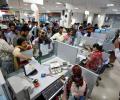
RBI Deputy Governor Shirish Chandra Murmu has dismissed concerns that the new Merchant Discount Rate (MDR) on UPI payments above Rs 2,000 will increase cash transactions. He also clarified the 'cash paradox' of rising digital payments alongside cash in circulation, explaining cash's dual role. Murmu further detailed the RBI's extensive regulatory changes aimed at reducing compliance burdens and emphasised that accountability for AI-driven decisions in finance will remain with institutional boards.

Axis Bank MD & CEO Amitabh Chaudhry has cautioned that the surge in FCNR(B) deposits could lead to 'abnormal lending' as banks seek to deploy excess liquidity, while also hinting at a potential interest rate hike in the near future.

Barclays Global Service Centre India MD & CEO Praveen Kumar has urged Indian banks to modernise their technology architecture and build AI-based defence systems to counter emerging cyber threats posed by AI tools.

AI4Bharat at IIT Madras and Josh Talks AI have launched 'Voice of India', a multimodal AI evaluation platform designed to assess AI systems against Indian conditions, languages, accents, and dialects. This platform aims to provide scientifically rigorous, India-specific evaluations, covering areas like Voice AI, large language models, document processing, safety, cultural appropriateness, and Indian legal reasoning, to build trust and enable informed deployment decisions.

Industry experts advocate for India to develop its own artificial intelligence (AI) safety framework, distinct from US or EU models, to address unique challenges like deepfakes and cyberattacks. They call for a comprehensive commitment involving all stakeholders and a hybrid regulatory approach combining voluntary and binding measures, as the Indian government also considers new AI regulations.

UIDAI Chairman Neelkanth Mishra announced the extensive deployment of Artificial Intelligence to detect and counter fraud in Aadhaar, describing it as a "cat-and-mouse game." He highlighted the dramatic increase in daily Aadhaar authentications and the launch of the Aadhaar Face Authentication SDK and Sandbox to enhance security and ease of integration for ecosystem partners.

Finance Minister Nirmala Sitharaman met with bank heads to discuss risks related to Artificial Intelligence (AI) following global concerns over Anthropic's Mythos model threatening data security of financial systems.

Jio Platforms Ltd's (JPL) public offer, valued at Rs 30,213 crore, was fully subscribed within 100 minutes of opening, making it the fastest-ever subscribed IPO in India, driven by strong institutional demand.

Chinese President Xi Jinping addressed the BRICS summit, urging the bloc to play a significant role in achieving peace and tranquillity in West Asia and the Gulf region. He highlighted BRICS' growth over two decades, its efforts in tackling global challenges, and its steadfastness in safeguarding the interests of the Global South. Xi called for opposing the Cold War mentality, strengthening multilateralism, and promoting cooperation in emerging domains like AI, as China prepares to chair the next summit.

BRICS finance ministers and central bank governors have called for increased representation of emerging-market and developing economies in the IMF and World Bank, while also criticising unilateral tariffs and trade measures, as the expanded bloc aims to bolster financial cooperation amidst global fragmentation.
Vice President CP Radhakrishnan launched Gnani Artha, an end-to-end sovereign AI stack for Indian enterprises and public institutions. He emphasised that new technologies, including AI, will enhance ease of work and create more jobs, drawing parallels with the IT industry's growth. The initiative, backed by the India AI Mission, aims for self-reliance and includes the Gnani Evon v3.3 language model and Gnani Plexus AI platform, offering cost-effective Indic language capabilities.
Vice President CP Radhakrishnan launched Gnani Artha, an end-to-end sovereign AI stack for Indian enterprises and public institutions. He emphasised that new technologies, including AI, will enhance ease of work and create more jobs, drawing parallels with the IT industry's growth. The initiative, backed by the India AI Mission, aims for self-reliance and includes the Gnani Evon v3.3 language model and Gnani Plexus AI platform, offering cost-effective Indic language capabilities.

Finance Minister Nirmala Sitharaman convened a high-level meeting with bank heads to assess cybersecurity risks linked to advanced AI models, following concerns over Anthropic's Claude Mythos system and its potential impact on financial data security.

For the first time, co-working spaces have surpassed the IT/ITeS sector as the largest occupier of office space in India during the January-September period, indicating a significant shift towards flexible workspaces, according to Anarock Research & Advisory.

India's MSME sector faces a significant formal credit gap of approximately Rs 60 lakh crore, with traditional channels meeting only a fraction of the demand. A new report suggests that a centralised, interoperable digital layer could effectively bridge this gap and enhance productivity across the formal business sector by digitising workflows and enabling cash-flow-based underwriting.

The Reserve Bank of India (RBI) has proposed a standard operating procedure (SOP) for banks to implement temporary debit holds on accounts or transactions suspected of being involved in money-mule activity and cyber-enabled financial fraud, with a maximum duration of 60 days.

Haryana's Chief Minister Nayab Singh Saini reviewed the progress of the Haryana AI Development Programme (HAIDP), a Rs 474-crore initiative developed with the World Bank, focusing on AI skilling, startup incubation, and ethical AI governance.
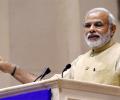
Prime Minister Narendra Modi, in his Independence Day address, highlighted technology and innovation as central to India's goal of becoming a developed nation by 2047. He called for India to lead in emerging technologies like AI, quantum computing, and space, announcing a massive AI skilling initiative for one crore youth. Modi stressed the importance of becoming a global innovation hub, bolstering energy security with nuclear power, and strengthening cybersecurity.

World Bank President Ajay Banga has advocated for the deployment of 'Small AI' locally deployed artificial intelligence running on inexpensive hardware to address daily problems faced by farmers and rural communities in emerging markets.

Union Finance Minister Nirmala Sitharaman announced the government's plan to establish a high-powered committee to examine reforms for the banking sector, aligning it with the vision of a 'Viksit Bharat' (Developed India) and India's next phase of growth.
